Alois Auer
Agate, 2026
(130 x 80 cm)
Elevated print on gesso on Aluminum panel. Factum Arte Foundation produced these works by digitally scanning prints made in 1853 from Auer's monumental work; The Discovery of Nature Printing, and blowing them up 10x to be printed by a custom printer developed by Factum Arte Foundation.
Price Upon Request
Elevated print on gesso on Aluminum panel. Factum Arte Foundation produced these works by digitally scanning prints made in 1853 from Auer's monumental work; The Discovery of Nature Printing, and blowing them up 10x to be printed by a custom printer developed by Factum Arte Foundation.
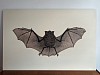
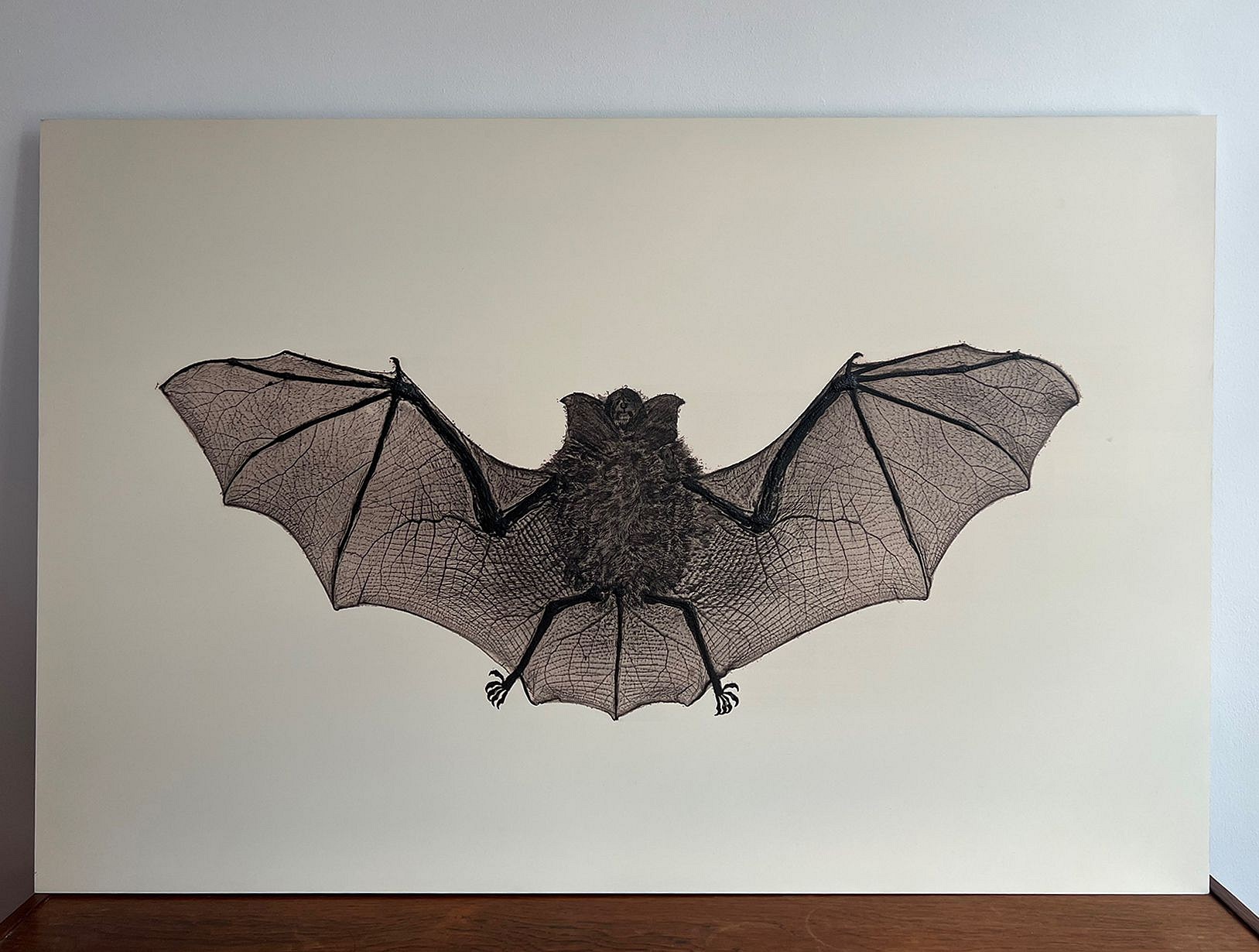
Alois Auer
Bat , 2026
13231-PR
(130 x 80 cm)
Elevated print on gesso on Aluminum panel. Factum Arte Foundation produced these works by digitally scanning prints made in 1853 from Auer's monumental work; The Discovery of Nature Printing, and blowing them up 10x to be printed by a custom printer developed by Factum Arte Foundation.
Price Upon Request
Elevated print on gesso on Aluminum panel. Factum Arte Foundation produced these works by digitally scanning prints made in 1853 from Auer's monumental work; The Discovery of Nature Printing, and blowing them up 10x to be printed by a custom printer developed by Factum Arte Foundation.
Alois Auer
Oak Leaf, 2026
(130 x 80 cm)
Elevated print on gesso on Aluminum panel. Factum Arte Foundation produced these works by digitally scanning prints made in 1853 from Auer's monumental work; The Discovery of Nature Printing, and blowing them up 10x to be printed by a custom printer developed by Factum Arte Foundation.
Price Upon Request
Elevated print on gesso on Aluminum panel. Factum Arte Foundation produced these works by digitally scanning prints made in 1853 from Auer's monumental work; The Discovery of Nature Printing, and blowing them up 10x to be printed by a custom printer developed by Factum Arte Foundation.
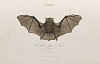
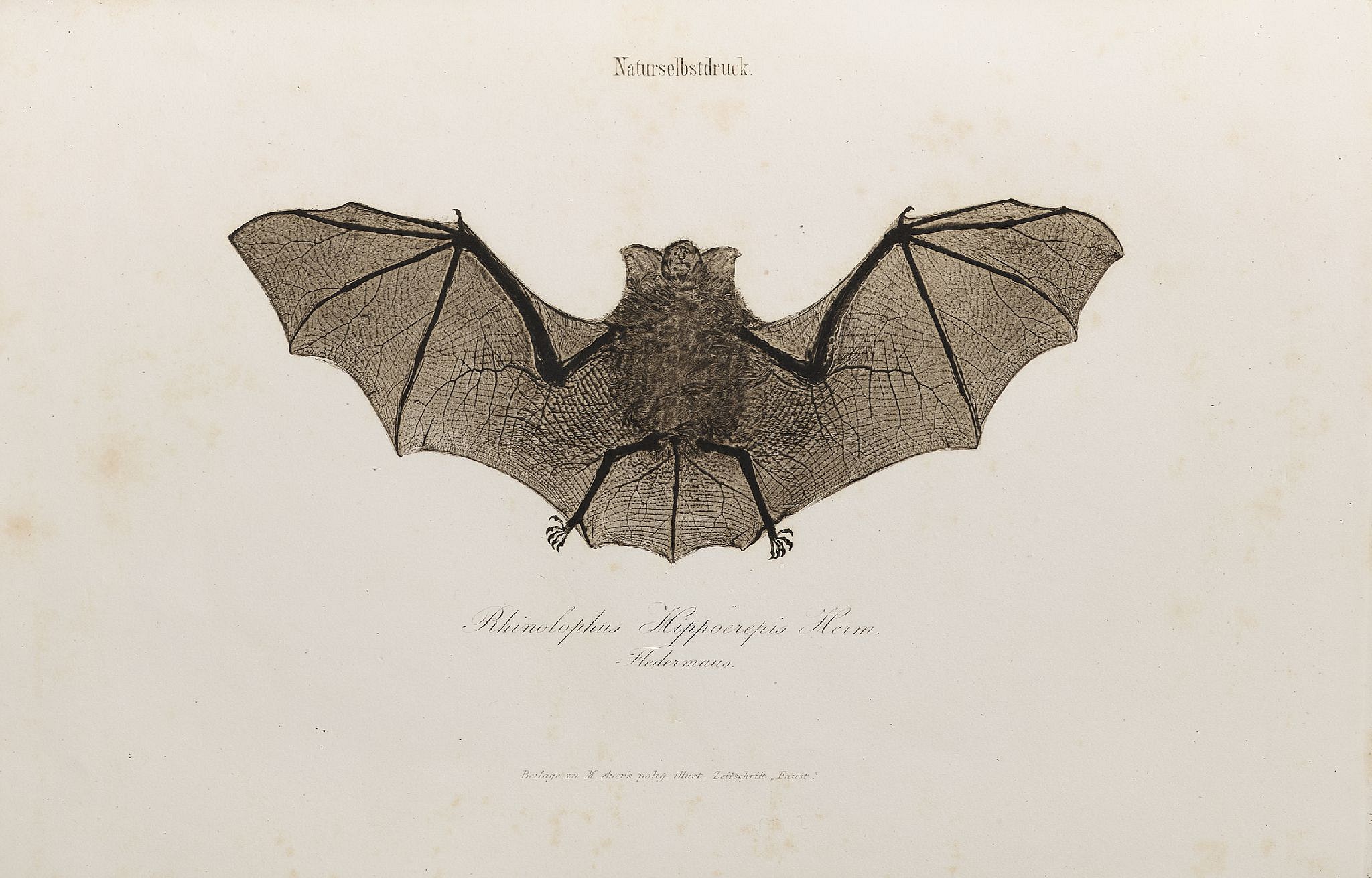
Alois Auer
Bat, 1855
13907-PR
(35 x 25.5 cm)
Nature Print from a copper plate, each unique. First published in Faust. Poligraphisch Illustrirte Zeitschrift. Vienna.
Price Upon Request
Nature Print from a copper plate, each unique. First published in Faust. Poligraphisch Illustrirte Zeitschrift. Vienna.
Alois Auer
Die Entdeckung des Naturesselbstdruckes oder die Erfindung etc./The discovery of Nature Printing , 1853
13879
(33 x 26 cm)
Vienna. This first issue of these 12 plates were sent to learn societies along with the text pamphlet(8vo) present here. ref Fischer "were accompanied by a portfolio or folio Plaques(Plates) sent to learned societies." subtitle: The discovery of the self-printing of nature or the invention of whole herbaria, fabrics, lace, embroidery and all originals and copies in general, no matter how subtle they are and have indentations in themselves, through the original itself in a simple and quick way. To produce printing forms with which one can both print and emboss white on a colored background, as well as with the natural colors on white paper imprints, identical to the originals. The prints show: 1) fish fossil, black, 2) 5 agates, 3) 1 large Agate, 4) 4 agate, 5) 4 lace pattern white-blue, 6) large oak leaf with front and back, d. H. the board printed on both sides, 7-9) plants, colored, 10-n) mosses, colored, 12) bat wing.
Price Upon Request
Vienna. This first issue of these 12 plates were sent to learn societies along with the text pamphlet(8vo) present here. ref Fischer "were accompanied by a portfolio or folio Plaques(Plates) sent to learned societies."
subtitle:
The discovery of the self-printing of nature or the invention of whole herbaria, fabrics, lace, embroidery and all originals and copies in general, no matter how subtle they are and have indentations in themselves, through the original itself in a simple and quick way. To produce printing forms with which one can both print and emboss white on a colored background, as well as with the natural colors on white paper imprints, identical to the originals.
The prints show: 1) fish fossil, black, 2) 5 agates, 3) 1 large Agate, 4) 4 agate, 5) 4 lace pattern white-blue, 6) large oak leaf with front and back,
d. H. the board printed on both sides, 7-9) plants, colored, 10-n) mosses, colored, 12) bat wing.
Victor Claro
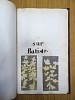
Empreintes de plantes er de feuillages / Prints of plants and foliage , 1901
13160-BK
(36.4 x 22.5 cm)
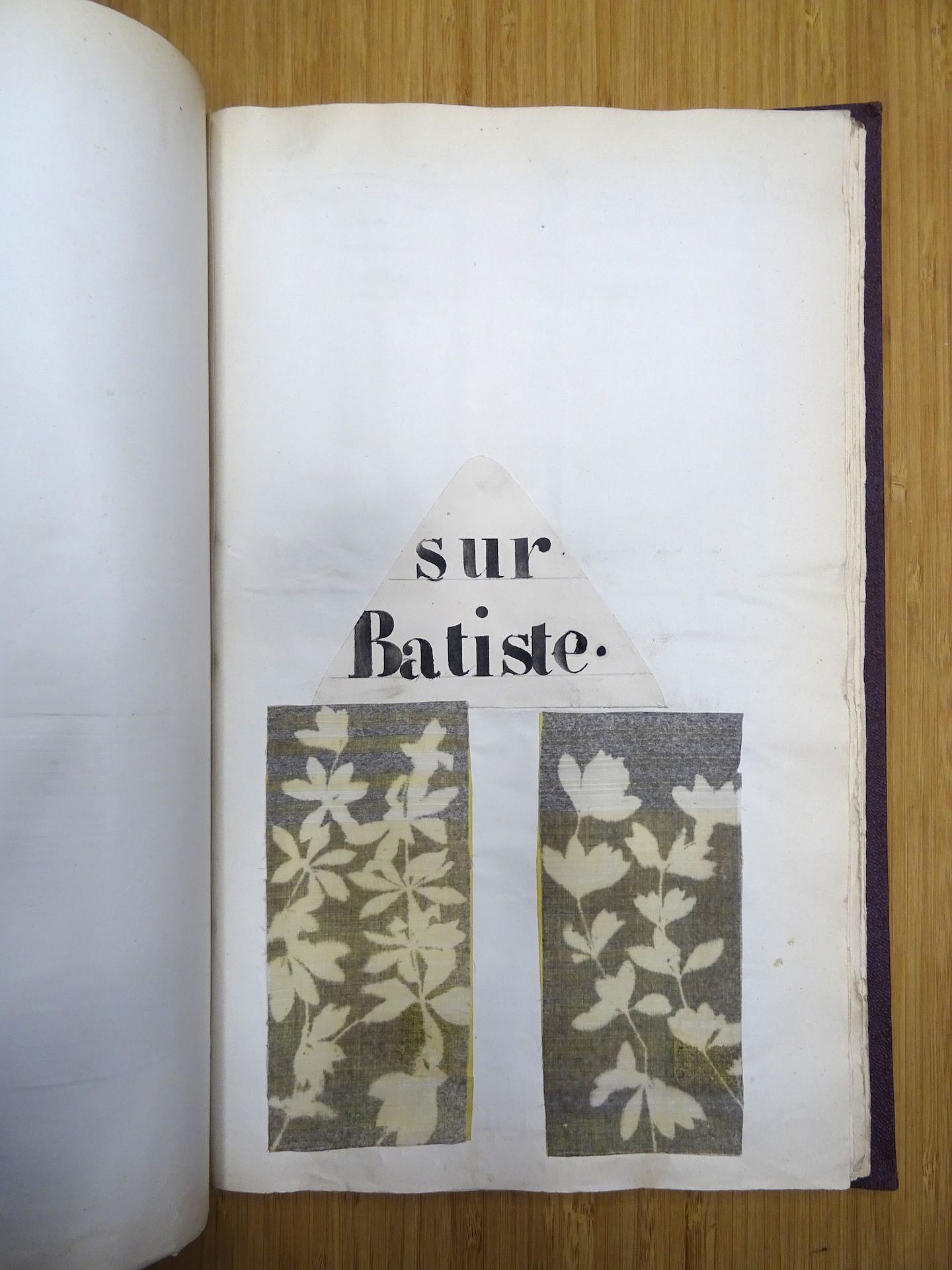
Unique manuscript In-folio, brown half-sorrow, 4-nerve back decorated with golden florets, linings, and guards with marbled paper. Binding of the time. Dedication in ink on inside cover. " Souvenie Uncle Claro" Collection composed of 239 plant nature prints on fabric (canvas, cotton and linen), printed in different ways; negative on a pink, gray green or yellow background, sometimes with a yellow sheet of paper behind. Sometimes on cloth with already existing patters/stripes. Unlike nature prints made in the 18th century for botanical purposes, these prints are the result of a cloth dye on which a pinned plant specimen is applied, the negative parts accurately drawing the silhouette of the plant looking almost 3-dimentional. In the album, the precision with which each collected specimen is rendered as well as the attention to detail appear as a praise for the grace of these plant entities. More than a simple botanical documentation, Victor Claro translates his taste for this field by expressive and aesthetic symbols. It is both a botanical work built for scientific purposes, but also an artistic object where the sensitivity of the author is visible. Fruit of the passion of Victor Claro, collector from Flanders identified by a manuscript ex-dono, this collection with an aesthetic and patrimonial dimension shows a rich variety of wild plants
Price Upon Request
Unique manuscript In-folio, brown half-sorrow, 4-nerve back decorated with golden florets, linings, and guards with marbled paper. Binding of the time. Dedication in ink on inside cover. " Souvenie Uncle Claro"
Collection composed of 239 plant nature prints on fabric (canvas, cotton and linen), printed in different ways; negative on a pink, gray green or yellow background, sometimes with a yellow sheet of paper behind. Sometimes on cloth with already existing patters/stripes.
Unlike nature prints made in the 18th century for botanical purposes, these prints are the result of a cloth dye on which a pinned plant specimen is applied, the negative parts accurately drawing the silhouette of the plant looking almost 3-dimentional.
In the album, the precision with which each collected specimen is rendered as well as the attention to detail appear as a praise for the grace of these plant entities. More than a simple botanical documentation, Victor Claro translates his taste for this field by expressive and aesthetic symbols. It is both a botanical work built for scientific purposes, but also an artistic object where the sensitivity of the author is visible.
Fruit of the passion of Victor Claro, collector from Flanders identified by a manuscript ex-dono, this collection with an aesthetic and patrimonial dimension shows a rich variety of wild plants
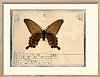
YUJI ITAYA
YUJI ITAYA, 1939
13892-BK
(19.1 x 26.7 cm)
Aichi Prefecture, Japan A suite of 95 unique scale transfer specimen prints on paper (49 butterflies, 46 moths), title page, introduction pages and with additional drawing and collage. The first section, on butterflies, contains 49 impressions, shown here with the original title page. Some pages present two sets of wing impressions, showing both the upper and lower surfaces of the wings. These 49 impressions are further enhanced with original compositions executed in the spatter technique using paper silhouettes of butterflies on each page. The second section, on moths, contains 46 impressions, also with some pages showing two sets of wing impressions. Each specimen page features a printed border in silk-screened variants, with a pair of drawn butterflies at the top corners and a table for specimen information at the bottom. The work includes a collaged title page and a ten-page introduction covering the development and behavior of butterflies and moths and their place in the animal kingdom. Some pages include tipped-in photographic illustrations of the materials needed for specimen collection, along with a collecting guide enhanced with illustrations in indigo and red ink executed in the spatter technique. The rinpun (鱗粉) or scale-transfer technique — known in European sources as lepidochromy or butterfly wing transfer printing — was a historical method of recording wing patterns by transferring the scales of butterflies and moths onto paper or other surfaces. In practice, detached wings were gently pressed onto absorbent paper or paper lightly coated with an adhesive such as gum arabic, starch paste, or diluted glue. When the wing was lifted away, the scales adhered to the surface, producing a flat, mirror-image impression that preserved the insect's coloration, symmetry, and overall wing pattern without retaining the body. The technique was used by both naturalists and educators. From the eighteenth and nineteenth centuries onward, it appeared in European natural history collections as a means of documenting exact coloration before reliable color printing became available.
Price Upon Request
Aichi Prefecture, Japan
A suite of 95 unique scale transfer specimen prints on paper (49 butterflies, 46 moths), title page, introduction pages and with additional drawing and collage.
The first section, on butterflies, contains 49 impressions, shown here with the original title page. Some pages present two sets of wing impressions, showing both the upper and lower surfaces of the wings. These 49 impressions are further enhanced with original compositions executed in the spatter technique using paper silhouettes of butterflies on each page. The second section, on moths, contains 46 impressions, also with some pages showing two sets of wing impressions. Each specimen page features a printed border in silk-screened variants, with a pair of drawn butterflies at the top corners and a table for specimen information at the bottom.
The work includes a collaged title page and a ten-page introduction covering the development and behavior of butterflies and moths and their place in the animal kingdom. Some pages include tipped-in photographic illustrations of the materials needed for specimen collection, along with a collecting guide enhanced with illustrations in indigo and red ink executed in the spatter technique.
The rinpun or scale-transfer technique — known in European sources as lepidochromy or butterfly wing transfer printing — was a historical method of recording wing patterns by transferring the scales of butterflies and moths onto paper or other surfaces. In practice, detached wings were gently pressed onto absorbent paper or paper lightly coated with an adhesive such as gum arabic, starch paste, or diluted glue. When the wing was lifted away, the scales adhered to the surface, producing a flat, mirror-image impression that preserved the insect's coloration, symmetry, and overall wing pattern without retaining the body.
The technique was used by both naturalists and educators. From the eighteenth and nineteenth centuries onward, it appeared in European natural history collections as a means of documenting exact coloration before reliable color printing became available.
Carl Franz Anton Schreibers
Beyträge zur Geschichte und Kenntniss meteorischer Stein- und Metal-Massen, und der Erscheinungen, welche deren Niederfallen zu begleiten pflegen., 1820
3050-BK
(40 x 28 cm)
Vienna: Verlage von F. G. Heubner, 1820. First edition of the earliest iconography of meteorites with eight lithographed plates (one folding and another partly hand-colored), an engraved strewn field map, perhaps the first ever such map, showing not only the location of all of the 63 fragments, but the names of the villagers who collected them, including one remarkable plate—an impression taken directly from a meteorite that fell in about 1400, the first use of a mineral in nature printing. The Elbogen meteorite (as it is known, Elbogen being the German name for the village of Loket, today in the Czech Republic) is an exciting exception, being quite large (about 236 lb./170 kg). Fortunately, be it due to local superstition or awe, the stone was preserved. Pieces of it were distributed to museums around the world for scientific study. The biggest segment is deposited in the Naturhistorisches Museum in Vienna, weighing roughly 80 kilograms (180 lb.). It is there that the Austrian mineralogist, Count Alois von Beck Widmanstätten, encountered the rock. Intrigued, in 1808, he discovered that a sliced iron-rich meteorite could be etched with acid to reveal a distinct pattern (now known as the Widmanstätten pattern). This pattern could be recorded on paper by inking and printing directly from the etched meteorite surface. This book is the first ever to describe a particular meteorite collection. It has some of the most arresting images anywhere of recorded meteorites, including the double- page plate that opens the book, displaying the 86-pound chunk of iron that fell in Hraschina (Hrašćina), Croatia, on May 26, 1751. The images in the book were printed by lithography, which was invented around 1800; it may indeed be the first geology book anywhere to be illustrated with lithographs. And it revealed that when an iron meteorite is heated in a flame, or rinsed with acid, it reveals a distinctive pattern, known as a Widmanstätten pattern, that only appears on meteorites. Alois Widmanstätten had discovered this some years earlier (and was not in fact the first to do so), but most geologists learned about Widmanstätten patterns from a plate in von Schreibers’ book that was actually printed directly from an etched meteorite. Karl Franz Anton Ritter von Schreibers, an Austrian naturalist, was born Aug. 15, 1775. Although trained as a physician, von Schreibers took all of nature as his province, which made him the ideal choice to assume the directorship of the Vienna Natural History Museum in 1806. Although he was competent as a zoologist and botanist, his true love was minerals, and especially meteorites. The Vienna museum had been collecting meteorites since the 1740s, but it wasn't until the turn of the 19th century that scientists were finally convinced that meteorites were not some sort of atmospheric debris, but came to earth from deep space. Ref: Fischer No. 22, and Dr. William B. Ashworth, Jr., Consultant for the History of Science, Linda Hall Library and Associate Professor, Department of History, University of Missouri-Kansas City.
Price Upon Request
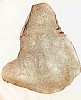
Vienna: Verlage von F. G. Heubner, 1820. First edition of the earliest iconography of meteorites with eight lithographed plates (one folding and another partly hand-colored), an engraved strewn field map, perhaps the first ever such map, showing not only the location of all of the 63 fragments, but the names of the villagers who collected them, including one remarkable plate—an impression taken directly from a meteorite that fell in about 1400, the first use of a mineral in nature printing.
The Elbogen meteorite (as it is known, Elbogen being the German name for the village of Loket, today in the Czech Republic) is an exciting exception, being quite large (about 236 lb./170 kg). Fortunately, be it due to local superstition or awe, the stone was preserved. Pieces of it were distributed to museums around the world for scientific study. The biggest segment is deposited in the Naturhistorisches Museum in Vienna, weighing roughly 80 kilograms (180 lb.). It is there that the Austrian mineralogist, Count Alois von Beck Widmanstätten, encountered the rock. Intrigued, in 1808, he discovered that a sliced iron-rich meteorite could be etched with acid to reveal a distinct pattern (now known as the Widmanstätten pattern). This pattern could be recorded on paper by inking and printing directly from the etched meteorite surface.
This book is the first ever to describe a particular meteorite collection. It has some of the most arresting images anywhere of recorded meteorites, including the double- page plate that opens the book, displaying the 86-pound chunk of iron that fell in Hraschina (HrašÄ‡ina), Croatia, on May 26, 1751. The images in the book were printed by lithography, which was invented around 1800; it may indeed be the first geology book anywhere to be illustrated with lithographs. And it revealed that when an iron meteorite is heated in a flame, or rinsed with acid, it reveals a distinctive pattern, known as a Widmanstätten pattern, that only appears on meteorites.
Alois Widmanstätten had discovered this some years earlier (and was not in fact the first to do so), but most geologists learned about Widmanstätten patterns from a plate in von Schreibers’ book that was actually printed directly from an etched meteorite.
Karl Franz Anton Ritter von Schreibers, an Austrian naturalist, was born Aug. 15, 1775. Although trained as a physician, von Schreibers took all of nature as his province, which made him the ideal choice to assume the directorship of the Vienna Natural History Museum in 1806. Although he was competent as a zoologist and botanist, his true love was minerals, and especially meteorites. The Vienna museum had been collecting meteorites since the 1740s, but it wasn't until the turn of the 19th century that scientists were finally convinced that meteorites were not some sort of atmospheric debris, but came to earth from deep space.
Ref: Fischer No. 22, and Dr. William B. Ashworth, Jr., Consultant for the History of Science, Linda Hall Library and Associate Professor, Department of History, University of Missouri-Kansas City.